
Refrigerator Making a Loud Buzzing or Clicking Noise? What It Usually Means
Refrigerators naturally make some noise, but repeated clicking, persistent buzzing, or a new rattling sound can point to a problem. These are among the common issues our refrigerator repair team in Westminster gets called to diagnose.
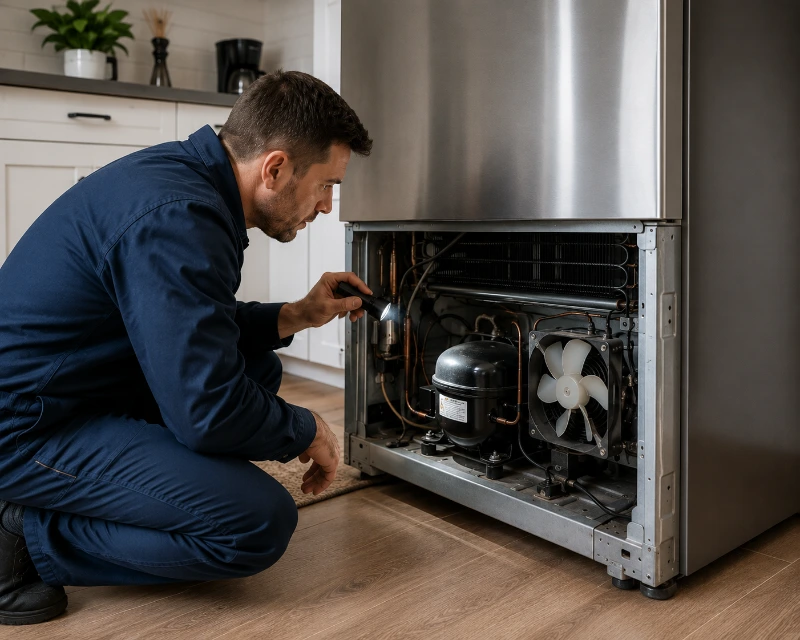
What Does Each Type of Noise Usually Point To?
I can’t diagnose a fridge over a phone description with total certainty, but noise type narrows it down fast. Here’s what we typically find on service calls when someone describes each one:
| What You Hear | Most Likely Cause |
|---|---|
| Steady buzzing, gets louder over time | Failing compressor or worn fan motor bearing |
| Rhythmic clicking every few seconds | Start relay struggling to kick the compressor on |
| Loud clicking that repeats and won’t stop | Start relay failure — compressor trying and failing to start |
| Rattling, especially when compressor runs | Loose compressor mount, condenser fan blade hitting debris, or something resting against the cabinet |
| High-pitched squeal | Evaporator or condenser fan motor bearing wearing out |
| Popping or cracking | Usually normal — thermal expansion and contraction of plastic liners |
| Gurgling or hissing after compressor shuts off | Usually normal — refrigerant moving through the lines |
Is Clicking Always a Bad Sign?
Not always, but repeated clicking that happens over and over without the compressor ever settling into a steady hum usually means the start relay is trying and failing to get the compressor going.
That’s a part we replace often, and it’s a relatively affordable, repeated failed startup attempts can put additional stress on the compressor, so persistent clicking is worth diagnosing rather than ignoring. out the compressor windings themselves, turning a $150–250 relay fix into a $600+ compressor replacement.
What About a Loud Buzz That Wasn’t There Before?
New buzzing, especially if it gets louder over a few days, is worth paying attention to. It can mean the compressor motor windings are starting to fail, or a fan motor bearing is wearing down.
Either way, this is worth getting looked at before the unit stops cooling altogether. A new or worsening noise can sometimes appear before a refrigerator loses cooling completely — see our guide on refrigerator not cooling but freezer still works if the fridge side has already started running warm.
How Can You Narrow It Down Yourself Before Calling?
A few simple observations can help narrow down whether the sound is coming from the evaporator fan, condenser fan, compressor, or something as simple as debris.
Where Is the Sound Coming From?
Stand at the front of the fridge, then check the back and underneath. Most models have a front-bottom grille covering the condenser fan and coils. A noise from the back-bottom area usually points to the compressor or condenser fan. A noise from inside the freezer compartment points to the evaporator fan.
Does It Happen All the Time, or Only When the Compressor Cycles On?
If the noise only happens right as the fridge kicks on, you’ll often hear a soft hum start a second or two after the click. That can be consistent with normal compressor startup. Combined with buzzing or repeated clicking, though, it points toward the start relay or compressor struggling.
Have You Checked for Debris Around the Condenser Fan?
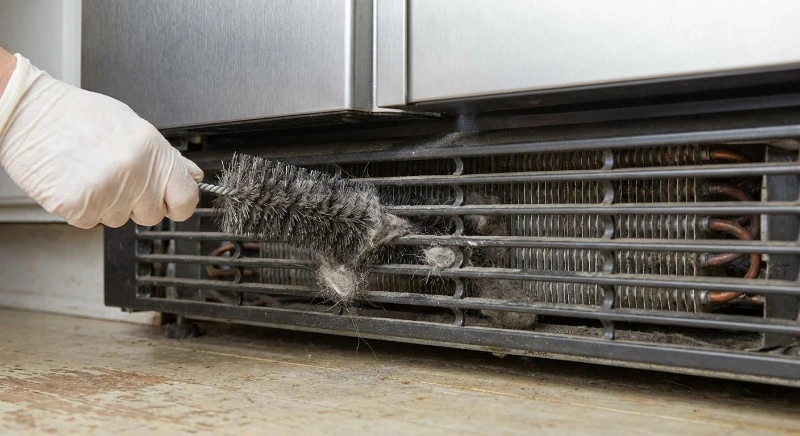
Pull the bottom front grille off, if your model allows it, and look for pet hair, dust, or a stray item that fell back there. A fan blade clipping debris is one of the easiest causes to rule out before assuming a motor is bad.
Refrigerator Noise: What Should You Check?
Where the sound comes from and when it happens can help narrow down the possible cause. Use the guide below to identify what to check before assuming a component has failed.
| What You Notice | Possible Cause | What to Check |
|---|---|---|
| Buzzing from the back or bottom | Compressor or condenser fan | Note whether the sound starts when the refrigerator begins a cooling cycle. |
| Clicking every few seconds | Start relay or control issue | Listen for a repeated click-pause-click pattern and check whether the compressor starts. |
| Rattling when the compressor runs | Fan, debris, loose component, or cabinet vibration | Check around the condenser fan and nearby panels for debris or anything touching the cabinet. |
| Squealing from inside the freezer | Evaporator fan motor | Listen for the sound from inside the freezer and note whether it changes when the fan cycles. |
| Noise changes or stops when a door opens | Evaporator fan or door-related component | Notice whether the sound changes when the freezer or refrigerator door is opened. |
| Occasional popping or cracking | Thermal expansion and contraction | If cooling is normal and the sound is occasional, it may be part of normal refrigerator operation. |
Keep in mind: Refrigerator noises can have overlapping causes. The sound alone cannot confirm which component is failing, so persistent or worsening noises may require a proper diagnosis.
Where You Hear It Can Be a Big Clue
Homes with pets or homes near open fields tend to get more dust and debris pulled into the condenser coils and fan. If you haven’t vacuumed the coils in the last year, that’s worth doing regardless of what’s causing the noise — it extends compressor life either way.
When Should You Stop Troubleshooting and Call Someone?
If you’ve cleared debris and the noise persists, or if it’s a buzzing or clicking sound rather than the normal pop-and-hiss, that’s when we’d rather take a look than have you keep running the unit and risk a larger failure.
Compressor and sealed-system work isn’t something to DIY — it involves refrigerant handling that requires EPA certification, so this is one repair category where a technician visit is the safer path.
Not sure what that noise is?
Describe it and we’ll tell you what to expect.
Same-day appointments available across Westminster, Broomfield, and Arvada. Call (720) 783-1707 →Does the Type of Refrigerator Change What the Noise Means?
Mostly the diagnosis logic stays the same across models, but a few refrigerator types have their own quirks worth knowing before you assume the worst.
French Door and Bottom-Freezer Models
These tend to have the compressor and condenser fan mounted lower and further back than older top-freezer designs, which can make noise sound louder or more “boomy” simply due to cabinet placement.
A noise that would be barely audible on an older unit can seem alarming here, so it’s worth keeping that in mind before assuming a normal compressor cycle is a problem.
Side-by-Side Refrigerators with Dual Compressors
Some higher-end side-by-side and multi-zone units use two separate compressors or a dual-evaporator system. If you hear a noise that seems to come and go on a schedule that doesn’t match the fridge’s overall cooling cycle, it may be the second compressor or a secondary fan running independently.
Smart and Connected Refrigerators
Newer connected models sometimes have additional small fans and pumps for features like external water and ice dispensers or humidity-control drawers. These can produce clicking or whirring sounds unrelated to the compressor.
If your model has extra features beyond basic cooling, it’s worth checking whether the noise lines up with one of those systems cycling.
Does Colorado’s Climate Play Any Role in This?
Colorado’s altitude and dry climate usually aren’t the direct cause of a refrigerator making a new buzzing or clicking noise. However, warmer indoor temperatures can make a refrigerator run more often, which may make an existing fan, relay, or compressor problem more noticeable.
Where we do see a regional pattern is seasonal: homes here run their fridges harder during hot, dry summer stretches when kitchens run warmer and the unit cycles more often, and that extra run time can be what finally reveals a start relay or fan motor that was already on its way out.
So the climate doesn’t cause the failure, but Westminster’s summer heat can be what surfaces it a little sooner than in a milder climate.
What Does This Repair Actually Cost?
Ranges we’re typically quoting for noise-related repairs on service calls in this area:
Start Relay / Overload Replacement
The most common fix for repeated clicking.
$150–$250Evaporator or Condenser Fan Motor Replacement
Typical for buzzing or squealing.
$200–$350Condenser Coil Cleaning
Often bundled into a standard service call, with no separate parts cost.
Service CallCompressor Replacement
For cases where noise has progressed to compressor failure.
$500–$900+As always, we diagnose first and give you a firm number before doing any work — these are just typical ranges to set expectations.
Frequently Asked Questions
A few of the questions homeowners commonly ask when their refrigerator starts making a buzzing, clicking, rattling, or unusual noise. Have a different question? Check our full refrigerator repair FAQ.
It depends on the noise and whether the refrigerator is still cooling normally. A normal pop, crack, gurgle, or occasional hum is generally not a concern. Repeated clicking, a new loud buzz, or a noise that is getting worse is worth checking before continued operation causes a larger failure.
Yes, and it’s one of the more overlooked causes of refrigerator rattling. An unlevel fridge can allow the compressor or condenser fan housing to make light contact with the cabinet or floor during vibration. Checking and adjusting the leveling feet can resolve this type of noise when the refrigerator is otherwise working normally.
A start relay or overload replacement is typically around $150–$250, depending on the refrigerator and the parts required. We diagnose the cause first and provide a firm repair price before doing the work.
Age can matter because older refrigerators have more accumulated run hours and may have more wear on compressor, fan, and relay components. A new noise on an older refrigerator is worth investigating, especially if cooling performance has also changed.
Some Samsung models can produce clicking sounds during normal defrost or other operating cycles, but the timing matters. If the clicking happens every few minutes rather than during a longer defrost cycle, it may be related to the ice maker, water valve, relay, or another component rather than normal defrost operation. Timing the sound and noting whether it coincides with another refrigerator function can help narrow it down.
A brief hum or buzz during compressor startup can be normal on some LG models, particularly while the compressor ramps up. If the buzzing continues well beyond startup, becomes noticeably louder, or changes from one cycle to the next, it is worth having the compressor, mounts, and related components checked.
If the click happens only when the freezer door moves and the refrigerator is cooling normally, it is usually unrelated to the compressor. The sound may come from the door latch, magnetic door switch, hinge, or another mechanical part that moves as the door opens and closes.
Not necessarily. A refrigerator can make a different startup sound after a longer idle or defrost period, particularly when the surrounding kitchen is cooler overnight. If it clicks once and then starts and runs normally for the rest of the day, it may not indicate an immediate failure. If the clicking becomes repetitive or increasingly frequent, it is worth having the start components checked.
A single clunk timed with ice production can come from the ice maker’s harvest mechanism releasing cubes into the bin. That can be normal on many models. If the sound is accompanied by grinding, repeated impacts, or occurs even when the ice bin is full, the auger motor, ice maker, or another component may be struggling against a jam. If the ice maker has stopped making ice altogether rather than just making noise, our ice maker troubleshooting guide walks through those checks in more detail.
Yes. An unlevel refrigerator can cause the compressor or condenser fan housing to make light contact with the cabinet or floor as the unit vibrates. That can create a rattle even when the refrigerator’s mechanical components are working correctly. Checking and adjusting the leveling feet is a simple first step before assuming a part has failed.